Independent analysis · Philip Hintze

Threat modeling & semantic systems

Find the risk
between
the layers.

I identify where meaning or reasoning breaks down, what can compensate for it, and what that compensation leaves unresolved.

Semantic microleverage · Compensation modeling · Threat analysis

MeaningActionConsequence
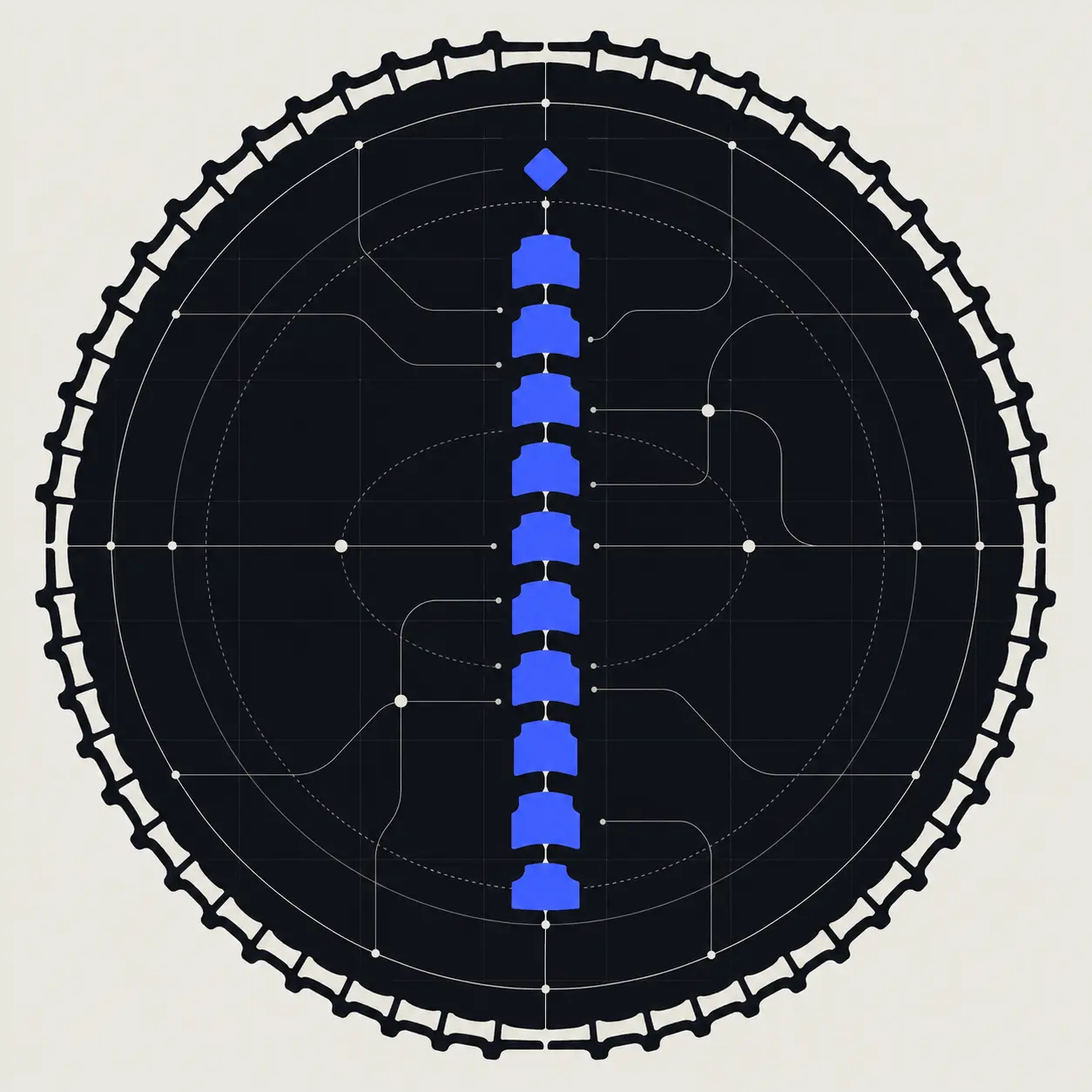
Abstract black system field with a segmented cobalt causal spine, measurement rings and connected nodes.
Ryggradsmodellen · The connections carry the risk

01 · How I reason

Notice the shift.
Connect the missing pieces.

My approach connects subtle changes in meaning with the perspectives needed to understand their consequences.

  1. Semantic microleverage

    Notice a small change in wording, context or authority that could produce a much larger change in interpretation or action.

  2. Compensation modeling

    Identify a specific weakness in one perspective or model, then examine what another must contribute to address it.

  3. Ryggradsmodellen

    Trace what the compensation preserves, what it costs, where the burden moves and what remains unresolved.

A worked example · Star Map of the Scar

A small transcription change.
A different claim.

Text comparison
Audio check pending

Two supplied texts · ASR passage 07:49.24–07:53.64
SourcePassage
Written lyricSupplied by the creatorTruth is what remains when tested
From every honest side
ASR transcriptReported by automatic speech recognitionTruth is what remains untested
From every honest side

The written lyric makes testing a condition for accepting a claim. The ASR text instead describes what remains untested. The disagreement changes the passage’s position on evidence.

  1. 01 · DetectThe ASR report contains “untested.”
  2. 02 · CompareThe written lyric contains “when tested.”
  3. 03 · CompensateThe lyric supplies context for questioning the transcript.
  4. 04 · VerifyListen to the recording to establish what was sung.

What remains unresolved: this comparison establishes a difference between the supplied texts. The recording has not been reviewed here, so the sung wording and the cause of the difference remain unverified.

One source can expose a possible weakness in another. It does not automatically become the authority.

Explore this kind of analysis together

02 · Focus areas

Where we can
work together.

For engineers, researchers and teams investigating problems that cross technical and human boundaries.

A possible collaboration

Threat modeling

Illustrative scenario

A safeguard depends on a reviewer noticing a change in context. What happens when that context never reaches them?

The boundary
Human decisions, technical systems and organizational rules.
The risk to examine
A risk can emerge from their interaction even when each part appears to work.
My contribution
Trace assumptions, control, downstream effects and the people carrying the consequences.
A useful first outcome
A shared threat scenario, a map of dependencies and questions to test.

Frontier question · Where does a bridge become a new control surface, and how should that new power be distributed?

For a closer lookExplore the full modelThree roots, hidden load, causal pathways, mechanisms and origins.

Model notes · Three roots

Start with what
must hold.

The framework connects three questions: what needs protecting, how meaning becomes action, and what absorbs the strain when something goes wrong.

View depth
Selected root

Compensation

The dynamic root. Compensation can create resilience, but it can also conceal weakness, move cost and consume the reserve that future stability depends on.

Connection: Reveals the architecture beneath the visible result.

Frontier prompt: What changes when this root is interpreted at different resolutions by different actors?

Model notes · Hidden load

Function is visible.
The load is not.

A system can look stable because a person, team, interface or reserve is silently carrying its instability.

Visible function

The system is working.

  • The service remains available.
  • The workflow completes.
  • Targets are met.
  • The organization reports stability.
Invisible load

Something is carrying it.

  • Someone reconstructs missing context.
  • One layer absorbs another layer’s failure.
  • A workaround becomes infrastructure.
  • Adaptive reserve is quietly consumed.
When a system appears to be working, what invisible compensation makes that appearance possible—and what happens if the compensator stops?

Frontier question · At which threshold does resilience become dependency, and who can see the transition first?

Model notes · Causal architecture

Follow the complete movement.

Select any vertebra. The path remains visible, so the effect never loses its cause.

Active stage · 04

Control / Compensation

Input
The system must respond to the gap.
Transformation
A person, process, interface or reserve adapts.
Output
Visible function is restored, preserved or redirected.
Next question
Who or what became the compensator?

Frontier question · Which feedback paths change the compensator itself, not only the system being compensated?

Model notes · Mechanisms

Eight patterns
to investigate.

Each mechanism reveals a different way systems lose meaning, move load or conceal dependency.

Selected mechanism

Failure Masking

Successful compensation hides the defect that made compensation necessary.

Initiating condition
A capable person or process repeatedly repairs the same weakness.
Hidden system effect
Performance looks stable while dependency increases beneath it.
Diagnostic question
What changes when the compensator stops?

Frontier question · Which mechanisms become visible only when two individually rational systems are coupled?

Black-and-white PH Model artifact framed by a segmented spine, containing an angel with a PH shield, chess pieces and an octopus.
PH Model · Original symbolic system

Model notes · Origins

The ideas behind the model.

PH Model is an earlier architecture, not another name for Ryggradsmodellen. Its practical compensation logic and symbolic system later informed a broader architecture: continuity, state, distributed intelligence and a load-bearing center.

Selected motif

Spine

A load-bearing perimeter: continuity, structure and the architecture that keeps the complete system connected.

03 · Your collaborator

Philip
Hintze

Independent model architect
Creator of Ryggradsmodellen

I bring the reasoning.
We develop the evidence together.

My work combines semantic microleverage, compensation modeling and threat analysis. I examine where an interpretation loses context, what another perspective can contribute and which limitations remain.

I work by comparing perspectives over time, tracking their limits and revisiting conclusions as new information arrives.

I am looking for collaborators who bring engineering, research or operational knowledge. Together, we can turn a model into a focused prototype, a testable question or a clearer decision.

Ryggradsmodellen is a framework in development. Collaboration is an opportunity to challenge its assumptions and test its practical value.

A focused way to begin

01 · Frame Choose one system, one problem and what needs protecting.02 · Compare Examine where perspectives diverge and what each contributes.03 · Follow through Review the reasoning as evidence develops and choose the next useful action.

04 · Collaborate

Start with one
difficult problem.

Tell me what you are working on, where the uncertainty lies and what you could bring to a collaboration.

What would you like to explore?

SelectedThreat modeling

Bring a system, a boundary or a failure scenario. We can examine the assumptions, follow the consequences and identify what needs testing.

Email Philipcontact@ryggradsmodellen.comOpens a draft in your email app.

Independent perspectiveShared investigationPractical next steps